
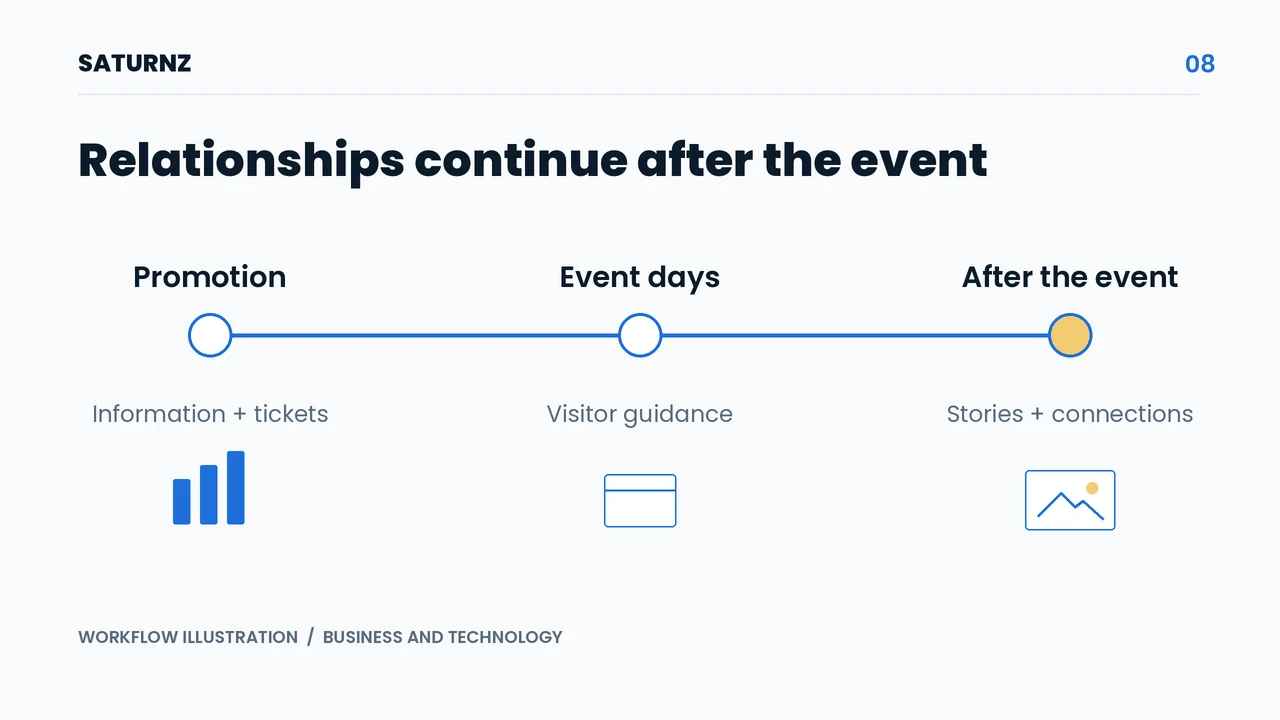
After an event ends, a prospective sponsor may look for documentation. Visitors want to revisit moments they attended. People discovering the event for the first time want to understand its atmosphere before following a future edition. The website still has useful work to do.
This changing need is visible in the Partilibur Caravan 2026 project. The festival took place on 1–2 August 2026 in Kota Batu. Its promotional website subsequently shifted towards official photographs, the aftermovie, and event stories.
Before the event: help visitors take the next step
An audience needs practical answers before buying: who is performing, when the event takes place, where it is, and which ticket channels are official. A website can bring information from separate announcements into one consistent reference.
During Partilibur’s promotional phase, the website presented performers, schedules, ticket categories, and purchasing guidance. Visitors were directed to official channels, including Artatix. The website connected interest in the event with a route to purchase through those channels.
That role differs from processing ticket transactions directly. When evaluating the website, organisers should distinguish visits to a purchasing page from completed purchases recorded by the ticket provider.
As information changes: maintain a shared reference
Performer announcements and schedules can develop during promotion. The team needs a way to update key information so visitors can check details beyond older materials already in circulation.
Assign responsibility for schedules, contacts, and ticket status. Before sharing a campaign link, check its destination and the information it contains. Consistency helps staff answer questions by directing people to the same reference.
The visual identity should also continue from promotional materials to the website. For Partilibur, the carnival character connects the digital experience with the event itself.
After the event: match the invitation to audience needs
The Partilibur website now presents photographs, the aftermovie, and post-event stories. Ticket sales for 2026 are marked as closed. Earlier content retains context so later visitors can understand the stage of the event they are reading about.
Merchandise appears as a collection, with a contact route to ask the store about availability. Partnership contacts and information for media are also available. These routes support ongoing relationships without suggesting that ticket purchasing remains open.
Sponsor and community visibility shows who took part. Documentation can support later conversations; any resulting partnership success still needs evidence from actual follow-up.
Plan the content handover before event day
Organisers can prepare a post-event content list in advance: selected photographs, official video, contributor credits, and a recap narrative. Check that material has appropriate publication permission.
Also assign responsibility for choosing the material and deciding when promotional information should change. Without an owner, a website may continue offering an event that has ended even when new documentation is available.
Measure according to the event stage
During promotion, review visits to essential information and clicks to official purchasing channels. After the event, examine engagement with documentation and relevant partnership or merchandise enquiries. These are proposed evaluation measures, not reported Partilibur analytics results.
Read the Partilibur Caravan 2026 case study for the implementation context. Saturnz can help plan a website around an event’s changing business needs. Discuss your audience journey, from initial promotion through the relationships you want to maintain afterwards.